The software is available to members of the institution through virtualisation servers.
The old approach was via Citrix client (for both Windows and OS X users) "link"
The new approach is via Application Jukebox client (only Windows users) "link"
Both require a UCD Connect userid and password to use.
Both suffer from latency delay issues so don't expect a snappy response, wait a while and the application should run ok (sooner or later).
Wednesday, September 9, 2015
Friday, August 28, 2015
Fonts on Mac
Use Font Book to install, view and manage fonts.
Located in the applications folder.
Open Font Book, or double-click a font file.
Mac Instructions only Based on James Lingard's MS Word template page.
Lingard's template file (LaTeX.dot) can be used to produce documents that look a lot like they've been typeset in TeX/LaTeX but you'll need to install the Computer Modern TrueType versions of fonts used by LaTeX to make them available in MS Word.
Installing the fonts:
Installing the Template:
Mac instructions only: You add Lindgard's LaTeX.dot file to the appropriate templates folder:
MS Word template location. From the Finder menu; Finder>Go>Go to Folder...
Your new document is now using Lindgard's stylesheet in MS Word, which should also be using the bakoma TrueType fonts. The screen and output should now mimic a LaTeX typeset document very closely.
Located in the applications folder.
Open Font Book, or double-click a font file.
Q: How to make a MS Word document look like it has been typeset in LaTeX?
Lingard's template file (LaTeX.dot) can be used to produce documents that look a lot like they've been typeset in TeX/LaTeX but you'll need to install the Computer Modern TrueType versions of fonts used by LaTeX to make them available in MS Word.
Installing the fonts:
- Download the minimum set: cmr10.ttf, cmbx12.ttf and cmbx10.ttf and other suggested tt files (e.g. bakoma true type fonts) Other examples: https://guides.lib.jmu.edu/freemedia/font and https://www.1001fonts.com/ and more...
- Once downloaded on the Mac, go to the download location and open the files by double-clicking. This starts Font Book which opens the tt (TrueType) font file. Font Book is included with OS/X. Basic instructions on using Font Book from Apple.
- Font Book provides a small display of the font and gives an option to "Install Font" via the button at bottom right of the window.
- Click Install Font; Font Book then checks/validates the font. You might need to review warnings, all trivial as far as I make it, after which the font is now available for Mac applications to use.
- The next time you open MS Word it will spend 30s or so updating its font listing.
 |
| User installed fonts view in Font Book |
Mac instructions only: You add Lindgard's LaTeX.dot file to the appropriate templates folder:
MS Word template location. From the Finder menu; Finder>Go>Go to Folder...
~/Library/Application Support/Microsoft/Office/User Templates/My TemplatesThen create a new MS Word document based on the template via:
- From the MS Word menu bar: File > New from Template...
- The MS Word "Document Gallery" window opens...
- Select "My Templates" in the navigation pane...
- Select the template named "LaTeX"
 |
| Word Document Gallery: New from Template. Chose LaTeX |
Your new document is now using Lindgard's stylesheet in MS Word, which should also be using the bakoma TrueType fonts. The screen and output should now mimic a LaTeX typeset document very closely.

Chemical reactions in Tex
Test that you have the packages loaded; from the command prompt enter
My example...
texdoc chemmacros
...to open The Chemmacros Bundle guide "chemforumla_en.pdf", inspired and based on usefully extending mhchem.
My example...
\documentclass{article}
\usepackage{chammacros}
\begin{document}
\ch{Na2SO4 ->[ H2O ] Na+ + SO4^2-}\\
\ch{( 2 Na+ ,SO4^2- ) + (Ba^2+ , 2 Cl- ) -> BaSO4 v + 2 NaCl}\\
\ch{2 CaCO3 <=>[ H2O ] 2 Ca^2+ + 2 CO3^2-}\\
\ch{HCOOH + H2O <=>[ H2O ] H3O^+ + HCOO^-}\\
\ch{2 CO3^2-\ + 4H^+ <=> 2 CO2 + 2 H2O} \\
\end{document}
Tuesday, August 25, 2015
Nvivo Exercises
Notes after attending Ben Meehan's "Nvivo; Analysing your Data" course
Adding Sources: (link)
Adding a new internal.
Q: Can I format the internal within Nvivo Mac? For example, add heading1, heading2 to structure the document or should I do this kind of formatting before bringing it into Nvivo Mac?
A: When in edit mode, click on the 'home' tab and use the 'styles' group. (link)
- Create Phase folders in the Nodes area to capture the state of the codes at different phases.
- From initial readings develop an initial coding framework.
- Add the initial coding framework, i.e. add 'nodes' you anticipate using to code your data.
- Gather your Interviews or transcripts in word. Formatting may be used for later auto-coding ('noding'). Applying Header 1 for several standard structured questions (closed or open), and can also apply Header 1 for the completely open ended unstructured lines of questioning. Could also use Header 1 for categorical data, structural data, attributes (e.g. male, female, rural, urban, highest qualification, age range).
- Internal Sources. Add your transcripts, interviews and other data sources as separate files (word documents), ie. imported as internal documents. Organise them into separate folders or not. Folder structure might mimic the structure you've used in a file system.
- Alternatively you can include them as External Sources. The problem with external sources is that you lose the in-system coding and analysis capability. In this case the actual external source isn't accessible, rather the file/object you add to your Nvivo project is what is used for coding. So you'll need to add your own description or copy/paste some of the data in order to enable node coding and query/search etc.
- Refine and develop the nodes/codes after each phase of coding.
- Annotations are a bit hard to dig out but they are 'findable' via the query. Recommend using a keyword at the beginning of each annotation so that you can retrieve them all quickly. This is particularly handy if you use annotations as a place for developing ideas and your own writing.
- Memos are a kind of 'next step' beyond 'annotations' for your own writing. Memos are handy in terms of being part of the Nvivo interface, they can be organised, subsetted and otherwise subject to global query/search coding/noding etc.
- Memos are for secondary materials that you develop yourself. I use them as the starting point for my written analysis.
- Classifications are a mechanism for associating categorical data, usually categories from tabulations (see above). A classification would match categorical/quantitative values with associated interview/observation or otherwise less structured matching data; done via a matching key as unique data index.
- Query/search is a mechanism for more mechanical questioning of your data. Sifting motivated by defined questioning that can be expressed in terms of more and more complex search queries. Can use boolean and search logic to build up queries. Query/searches can be saved. Results of query/search can also be saved as 'coded' nodes, or as 'Collection' sets.
- Collection sets are more static versions or results from the data. They aren't usually incorporated into future query/search or dynamic node logic.
 |
| Magic step: interview files with same name as index in categorical excel 'table' can be automatically 'joined'. |
Adding Sources: (link)
Adding a new internal.
Q: Can I format the internal within Nvivo Mac? For example, add heading1, heading2 to structure the document or should I do this kind of formatting before bringing it into Nvivo Mac?
A: When in edit mode, click on the 'home' tab and use the 'styles' group. (link)
Monday, August 24, 2015
Interpretive data analysis tips
John Schulz gives some insightful guidance on analysing interviews. But I feel his ideas can as equally apply to interpretive data more generally including texts, observations, recordings. Analysis can be approached in two basic ways, in a top-down deductive approach and a bottom up inductive approach. In fact many researchers alternate between the two approaches, particularly because analysis rarely occurs wholly in one more or the other. If we're honest about it we often combine the two approaches, where prior theories inform how we gather and treat the data, and where the data pushes back against preconception and instead offers up other interpretations.
Thursday, August 13, 2015
Three steps to charging (taking money) from a mobile phone account
My 12 year old's phone isn't working. He tells me that he hasn't been able to text or call anyone for months.
He hands it to me reluctantly. I top it up with €10 and out of curiosity check the credit again, typing *174# into the phone. What! Only €2.50 left? Immediately followed by receiving a system message on screen.
I suspect this has been happening for a while. It turns out that it has been happening for months and €112.50 in call credit has been siphoned off as a result.
No wonder he hasn't been able to make calls or texts.
So what's happening? I ring Vodafone. A fellow called Samir answers; "Yes, I can see the messages, I'm not sure how long you've been receiving them but you can assume it has been happening for a while. But you see sir, this isn't anything to do with us. All I can suggest is that you send a txt with the word 'STOP' in the body to halt your subscription to the service. If that doesn't work you need to contact the service provider immediately and make a complaint."
This is a revelation to me, the mobile phone operator doesn't actually get involved in debit transactions against its own customer's phone accounts. In fact it appears that Vodafone have no control or even visibility, of who or what services (read companies) can make charges to my mobile phone number.
I suppose I'm now being unreasonable but I have to ask, "what about getting my credit back?"
Samir says "Well, first you'll need to find who the number belongs to."
"How do I do that?" I ask, "how to I contact them?"
"You should go to http://www.phonesmart.ie/ then enter the number 57977. Phonesmart is a service run by the Regulator in Ireland, ComReg, they regulate phone-paid/premium services in Ireland.
The Phonesmart webpage returned the following information:
Although I'm getting more annoyed and frustrated I decide to follow his advice. ComReg are the regulator, do they have any information about this scam? A quick look at ComReg's website puts paid to that idea (http://www.phonesmart.ie/Common_Questions/88#A14).
Well the story doesn't end here. I checked the txt.Nation website (www.txtnation.com). It appears to be a bone fide business, they've won awards, go to trade shows and have contracts with government agencies like the UK's NHS. What are they doing taking money from my 12 year old?
I still don't know where or what the money is being taken for. I also feel like talking to someone. Is txt.Nation for real? So I called the helpline (1800 812 799).
A nice sounding lady called Beth answers. "Yes I can help" she says, "if I can verify your contact details and to mention that calls will be recorded for regulation and training purposes."
I explained what was happening and then she explained to me that I would need to log a support request. In fact she is able to start the process for me after which it can continue by email. "You see I'm sort of like a receptionist" she said. "I just take calls, you'll need to contact the support team. I've entered your details, you'll receive an email soon. Just log in to the customer care system and enter your complaint..."
I receive an email "Welcome to Customer Care, Support | txtNation" with instructions to setup an account on their system. I generate a password and access their system. Oh my god, this is getting tedious.
A support team person added a comment to the 'request' with a message.
Hmm, let's have a look at that website. Notice the very small lettering indicating that the "Player must be 18 years or over"? I've drawn a red line around it to draw your attention to it...

It turns out that Vodafone have no control of premium rate service access to your account nor do they have access to the data trail that it took me 2 days to piece together.
So money has moved from me to Vodafone. From Vodafone to txt.Nation. From txtNation to Remote. And perhaps also from Remote to careformobile who hosts this iPhone/iPad/MacBook prize lottery websites.
Surprisingly, there are just three (3) steps involved in permitting them to take money from me.
1. Click on the website, provide a mobile number, and click "Enter".
2. My mobile phone receives a message to reply to win by texting a keyword.
3. Send a text message with the keyword to the premium rate number.
Goodbye money.
My complaints are several.
No audit trail provided of communication initially authorising debits.
The actual competition element does not display the age limit prominently, apart from text in very small font at bottom of a secondary web page.
No valid age checks employed to prevent future underage use.
No default time limits set on subscription (it's permanent).
No defined process by which charges may be disputed or refunded.
No evidence that these kinds of lotteries or competitions are properly run or regulated. Is the lottery actually run, are results independently verified, what were the competition results over the period in which I was putatively subscribed to the lottery service? Was a competition actually taking place? How many phones, tablets or laptop computers were actually awarded as prizes?
He hands it to me reluctantly. I top it up with €10 and out of curiosity check the credit again, typing *174# into the phone. What! Only €2.50 left? Immediately followed by receiving a system message on screen.
You have a reverse charge message for you from 57977 that expires on 12-Aug-15. You currently have insufficient credit to receive this message. Vodafone IE-4832 SerivceProviderTxt.Nation LtdIt isn't a text message because when I click it disappears, no trace left on the phone.
I suspect this has been happening for a while. It turns out that it has been happening for months and €112.50 in call credit has been siphoned off as a result.
No wonder he hasn't been able to make calls or texts.
So what's happening? I ring Vodafone. A fellow called Samir answers; "Yes, I can see the messages, I'm not sure how long you've been receiving them but you can assume it has been happening for a while. But you see sir, this isn't anything to do with us. All I can suggest is that you send a txt with the word 'STOP' in the body to halt your subscription to the service. If that doesn't work you need to contact the service provider immediately and make a complaint."
This is a revelation to me, the mobile phone operator doesn't actually get involved in debit transactions against its own customer's phone accounts. In fact it appears that Vodafone have no control or even visibility, of who or what services (read companies) can make charges to my mobile phone number.
I suppose I'm now being unreasonable but I have to ask, "what about getting my credit back?"
Samir says "Well, first you'll need to find who the number belongs to."
"How do I do that?" I ask, "how to I contact them?"
"You should go to http://www.phonesmart.ie/ then enter the number 57977. Phonesmart is a service run by the Regulator in Ireland, ComReg, they regulate phone-paid/premium services in Ireland.
The Phonesmart webpage returned the following information:
Number Check ResultsSamir explained what happens. "You will have to call the premium service operator or email them directly. You might want to try to get back your credit. I'm afraid I can't to any more for you, you have to deal directly with the service."
If you're signed up to a subscription service on your mobile phone but want to quit, simply text the word STOP to the five-digit short code number associated with the premium rate service
( please note that a standard network charge may apply for this text).
Short Code: 57977
Service Provider:TxtNation Ltd
Helpline:1800 812 799
Email:aeus@txtnation.com.
Although I'm getting more annoyed and frustrated I decide to follow his advice. ComReg are the regulator, do they have any information about this scam? A quick look at ComReg's website puts paid to that idea (http://www.phonesmart.ie/Common_Questions/88#A14).
"Just because premium rate services cost more doesn’t mean that they are a scam or that they are bad. Most premium rate services operate without causing consumer harm."It seems that as far as ComReg is concerned premium rate services are part of a healthy telecommunications ecosystem. Fair enough, but what about the children I say! What checks are in place against a child being enabled, even facilitated, to enrol in a premium rate service? You might say that's my responsibility since I gave the child a mobile phone to use in the first place...
Well the story doesn't end here. I checked the txt.Nation website (www.txtnation.com). It appears to be a bone fide business, they've won awards, go to trade shows and have contracts with government agencies like the UK's NHS. What are they doing taking money from my 12 year old?
I still don't know where or what the money is being taken for. I also feel like talking to someone. Is txt.Nation for real? So I called the helpline (1800 812 799).
A nice sounding lady called Beth answers. "Yes I can help" she says, "if I can verify your contact details and to mention that calls will be recorded for regulation and training purposes."
I explained what was happening and then she explained to me that I would need to log a support request. In fact she is able to start the process for me after which it can continue by email. "You see I'm sort of like a receptionist" she said. "I just take calls, you'll need to contact the support team. I've entered your details, you'll receive an email soon. Just log in to the customer care system and enter your complaint..."
I receive an email "Welcome to Customer Care, Support | txtNation" with instructions to setup an account on their system. I generate a password and access their system. Oh my god, this is getting tedious.
Message from Answer-4u for TXT NATION LIMITED Date and Time: 10/08/2015 20:00 CLI: Message Taken By: Your personal A4U team PA Call Type: New Enquiry Caller's Name: Mr xxxx xxxxx Telephone Number: xxxxxxxx Country: Ireland Email: xxxx.xxxx@gmail.com Message: Caller wishes to discuss charges to his phone.
A support team person added a comment to the 'request' with a message.
Dear xxxx.xxxx, I can see that your mobile number has been billed by the service detailed below. You have now been opted-out of the service so will not receive further billing attempts from the service, unless you choose to opt-in again at some point in the future. If you are disputing the opt-in and wish to request a refund, you should contact Remote directly via +44 (0)333 202 0418 or help@careformobile.com.Two days to get this far. I begin to see why people think premium rate services are dodgy. Just to get to the bottom I've had to contact Vodafone, then txt.Nation, to an operator called Remote running a 'competition' website managed by a service called careformobile.com.
Remote is a company that charges €7.50 per week for you to enter a competition to win an iPhone/iPad/MacBook by texting keyword "phone", "apple", "book". You would have first visited the competition website and answered a multiple choice question before entering you mobile number into the box provided on the website...
...
After you have done this, you will receive a free text message.
Once you reply with the appropriate keyword, you will receive another message stating:
"Message: FreeMsg U have subscribed to WIN an iPad playie.77win.co & WIN the iPad each week for euro7.50/wk 3x2.5 euro/msg until u send STOP to 57977".
Best Wishes txtNation Online Support

It turns out that Vodafone have no control of premium rate service access to your account nor do they have access to the data trail that it took me 2 days to piece together.
So money has moved from me to Vodafone. From Vodafone to txt.Nation. From txtNation to Remote. And perhaps also from Remote to careformobile who hosts this iPhone/iPad/MacBook prize lottery websites.
Surprisingly, there are just three (3) steps involved in permitting them to take money from me.
1. Click on the website, provide a mobile number, and click "Enter".
2. My mobile phone receives a message to reply to win by texting a keyword.
3. Send a text message with the keyword to the premium rate number.
Goodbye money.
My complaints are several.
No audit trail provided of communication initially authorising debits.
The actual competition element does not display the age limit prominently, apart from text in very small font at bottom of a secondary web page.
No valid age checks employed to prevent future underage use.
No default time limits set on subscription (it's permanent).
No defined process by which charges may be disputed or refunded.
No evidence that these kinds of lotteries or competitions are properly run or regulated. Is the lottery actually run, are results independently verified, what were the competition results over the period in which I was putatively subscribed to the lottery service? Was a competition actually taking place? How many phones, tablets or laptop computers were actually awarded as prizes?
Wednesday, July 29, 2015
Tinkering with Technology
Tinkering with Technology: Go to Class -> https://class.coursera.org/tinkering-002
Week One: Introduction to Tinkering
Reflection Question: Having watched the videos what is my reaction?Week One: Introduction to Tinkering
“What happens when you push the button?”Often, the best way to teach, and learn, is to ask interesting questions. If I ask interesting questions I end up challenging myself and/or others to answer them. Often the best questions seem really stupid, or are really stupid, or actually are deliberately stupid, but can be used for a range of things, like stating, re-stating or establishing basic assumptions, like thinking through an idea (often a conclusion) backwards.
I felt, while watching the video, initially sceptical but eventually felt that I recognised the justification for what seem like quite trivial activities. Starting out with the scribble bots, for me at least, is a turn off, but I stuck with it. It took till the unstuffing exercise for me to realise there might be an underlying model, of learning through stages being applied. This happened, a kind of 'ah ha' moment, when I recognised similar mechanics being employed in the design of manufactured toys. I confess to feeling a little concerned when the camera cuts to a child wielding, or rather holding a craft knife while doing something else with his hands. I guess we all learnt something the hard way at some point in time.
Excerpts from The Art of Tinkering by Karen Wilkinson and Mike Petrich with contributions from Dale Dougherty, founder of MAKE magazine; Leah Buechley, founder of the MIT Media Lab's High Low Tech Group; and Mike Petrich and Karen Wilkinson from the Exploratorium.
Dougherty offers a nice definition; "Tinkering is the essential art of composing and decomposing physical things to suit a variety of purposes—from practical to whimsical." p6 He describes the necessity, for physical and social interaction to occur, that 'making' is a good and necessary alternative to screen based engagement with things and others.
World-making or world shaping to suit ourselves. The Exploratorium Tinkering Studio presents tinkering as a form of social engagement, like world-hacking perhaps, but I question whether something so individual can ever become a social movement. After all, in spite of the pronouncements to become creators rather than consumers, I feel when I am the bricoleur or tinkerer that I am ultimately doing it for myself, for my own consumption. In making something I'm involved in imagining its use, how it works, how to work it; that's the process of working it out until it just works. It might be rough (like the picture of the toolbox made of tools), seemingly unfinished, perhaps only useful to me and only useable by me. Which suggests to me that bricolage and made things have a long way to go before becoming products for consumption by someone else.
Dougherty then refers to the contributors as artists not designers or product engineers, or milliners or tailors etc. When does the distinction become clear between the maker, hacker, tinkerer and the artist? Is the artist version of a tinkerer a dilatant versus the professional or practitioner (who probably won't be considered an artist?) who is merely technically skilled? Perhaps this suggests rather the individual's development path? A progression from novice to competence to expertise?
Dougherty highlights the necessity of physical and social interaction for making as a good and necessary alternative to screen based engagement with things and others.
Leah Buechley emphasises the feeling of and need for joy and emotional involvement when making, tinkering, doing, breaking down, assembling, building etc. She suggests tinkering is both playful and reflective. The implication for organising for design is that it needs differing temporal pace and changing ambient environment; "quiet and (sometimes slow)" p9.
Counterintuitively it seems that originality finds its inspiration in copying, which begs the question; is anything truly original?
Wilkison and Petrich note that the word "tinker" comes from peripatetic (travelling) tinsmiths of the 1300s, who travelled around fixing stuff. There are suggestions that the word tinker is onomatopoeic in origin, deriving from the noises that a tinsmith's cart or pack made; the wares rattling as they moved through the countryside. In Ireland and Scotland the word is still used colloquially for people of Gypsy or Traveller ethnicity.
Chapter 2 of Invent to Learn, by Sylvia Libow Martinez and Gary S. Stager.
This book links maker, hacker, tinker movements with the academic perspectives on education, design, and cognition.
Although it might not concern many, I worry when writers depict knowledge, thought and learning as a psychological phenomenon "constructed inside the learner’s head" p31. Yes, these things necessarily involve the mind, are phenomena of the mind. However I wish to avoid the implication that such phenomena are 'embrained' processes, reducible to abstraction and rational formulation.
Why is this a concern for me? It's to do with what I believe is an implied model of knowledge and cognitive processes. A 'construction inside the learner's head' implies a kind of realism between a model-structure putatively occurring inside the head, corresponding with external action or perceived phenomena occurring outside or 'in the world'. This type of correspondence theory explaining processes of learning, knowledge etc. taps into the philosophical approach known as critical realism. Critical realism is a cybernetic theory of human cognition and agency, in which the human actor perceives the world and acts according to working hypotheses or models contained within their head. Revisable fidelity of the embrained model corresponding with the 'real world' allows for better decisions (actions) to be made.
A characteristic depiction this problematic approach might be
"the... cybernetic structure is itself enclosed in a meta mental model which might be considered as the world-view of the decider." (Chapter 4: Decision Integrity and Second Order Cybernetics by Anthony Hodgson. in Cybernetics and Systems Theory in Management: Tools, Views, and Advancements by Steven E. Wallis, 2010: p60)In contrast to the cybernetic embrained view of knowledge, Hubert Dryfuss and others have offered compelling critiques of the cybernetic theory of knowledge, learning and action (e.g. Flyvberg), highlighting the tendency for proponents to resort to meta-theoretical frames and transcendental perspectives, all the while failing to account for how we actually how existence occurs in direct experience. We exist in experience, situated, embodied, experientially involved in being, unable to step out of our being in the world.
The chapter contrasts 'constructivism' with Seymour Papert's notion of 'constructionism'. Constructivism presents psychological development of learning as occurring through processes of actively, mentally, reconstructing knowledge through individual and social involvement. Papert extends this by asserting that...
"learning is most effective when part of an activity the learner experiences as constructing a meaningful product. (Papert, 1986)".Rather than emphasing embrained processes, effective learning is necessarily embodied and engaged in the world, therefore involvement in constructing and making things builds more authentic learning and knowledge through experience.
Unfortunately emphasising processes as 'inside their head' or 'outside of their head' resuscitates the previous, flawed notion of learning as a cybernetic decision process.
Three useful ways of thinking about learning are presented: making, tinkering and engineering. Making is a kind of goal directed or driven action. Tinkering is a playful attitude or mindset, less driven, more open-ended. And engineering is a kind of analytical process of reflection and objectification, theorising and formalising what is learnt through description, models, diagrams etc. While these three ways of learning may be distinct, they might also be related to each other in terms of process or distinctive periods of learning through doing; Papert's constructionism.
A lot of space is devoted to how we should deal with computers in learning. The authors present a case for the computer to be a raw material for making and tinkering rather than merely an environment for managing action or consuming content.
If we contrast the cybernetic model against these interactive and social processes of tinkering or bricolage (the French world for DIY) we really must conclude that there is more than one way of learning and gaining knowledge, and therefore that we, as learners and teachers, need accommodate "the validity of multiple ways of knowing and thinking." (Turkle & Papert, 1991)
We should also stay open to the risk creating and reinforcing gendered roles and identities with tinkering/making/engineering. Gendered identification and gendered styles of teaching and learning contaminate the language and terminology, the way problems are posed, context setting, space making, power relationships in the learning environment, even seemingly innocuous values like dealing with mess versus tidiness, of risk taking or managing behaviour.
Various key authors are quoted around the topics around play and learning (Piaget, Vygotsky)
Week Two: Initial Explorations with Tinkering
Notes on videos:
Circuit Boards: Seeing It in Action: Illustrates the open exploratory approach, messing around with simple dc circuits. Playful, unstructured. It seems a bit limited but still useful foundational experiential electronics. I particularly liked the homemade feel to the elements, various lights and switches and motors mounted on wooden blocks with connections made with alligator clip wires.
Designing for Tinkerability: Circuit Boards: Activity elements: materials, environment and facilitation.
Materials are the resources that are used, consumed. This requires a fair bit of thinking-through on the parts of the learning facilitators, thinking through how these resources may be used.
Arrangement of environment deals with resources surrounding the activity like lighting, noise, round tables and chairs on rollers, to be aware of how architecture force upon focusing and defocusing structures. Recognise the value of inspiration by displaying decorations, previous examples, random pictures etc.
Facilitation may or may not as apparent, particularly when groups start self-supporting. Facilitation in this setting is all about encouraging people to be make mistakes and learn from them. To adopt a playful attitude and encourage exploration and experimentation. It might at times be useful to suggest some goal or problem that needs a solution to offer a motivation or challenge. Usually the facilitator is hoping to encourage and support an individual's own curiosity, offering supporting knowledge if needed. , flexible approaches, trial and error, meandering. Strategies for facilitating troubleshooting include suggestions like 'ok, it's looking pretty complicated, is there a way to simplify it? Another approach might be to 'do it again', 'let's repeat'. If something starts working encourage the student to expand it 'ok, now let's extend it or add something to it'.
Inspiration: Shih Chieh (CJ) Huang CJ is an artist working with lights, motors and found or recycled materials to create curious luminous animated structures. Have a look at CJ's workbench for tips on organising a workspace. And take notice of the parts area, he really puts tupperware to use, he does this work on a scale that demands he be organised and efficient.
 |
| Chandelier by Shih Chieh Huang |
Classroom Connection: Persistence, encouraging the students to persist with solving problems, not giving in to tell them a solution, not telling them how to do it, letting them figure it out for themselves, to watch the kids and see the 'lightbulb moment' going off in their minds. Avoiding telling them what we think they need to know and rather let the students take their own paths and follow their own interests which is healthier.
Pedagogical Perspective: Rob Semper: Refers back to Frank Oppenheimer's (particle physicist and founder of the Exploratorium in San Francisco) contribution, as part of the academic panel, to the ESS the first elementary science study curriculum in the US. Bulbs and Batteries (not ignoring the wires too) to give an understanding of electricity and circuits, which are pretty fundamental aspects of today's world.
CJ Huang TED talk on recent pieces inspired by bioluminescent life forms.
Carol Dweck talking about 'mindsets'; the book MindSet (2006), and the website at mindsetonline.com
Readings Week 2
Circuit Boards Activity Guide: This guide captures all of the material discussed in the previous videos, but includes much more by way of assistance and suggested prompts for facilitators. Practical and well structured, it provides some structure for the earlier recommendations on organising circuit board activities, i.e. materials, environment and facilitation.
Excerpt about Shih Chieh (CJ) Huang from The Art of Tinkering by Karen Wilkinson and Mike Petrich.
Week Three: Identifying Dimensions of Learning
Atelier; a word I rarely encounter and never used. However I find it to be evocative and exotic; a studio or workshop, imagined with paint splashes and wood shavings on the floor. A French word, collective noun, describing not just the studio space but includes the master artist, assistants, apprentices, students and others. The word derives from the Old French astelle and in turn from the Latin astula; meaning sticks, fragments, wood chips, splinters.
Readings Week 3
(PetrichEtAl_ItLooksLikeFun_2013)
Petrich et al (2013) show that one of the core experiences of this kind of unstructured designing/learning process is the "process of becoming stuck and then unstuck".
Their interviews of participants also point to "how important the sense of self is in the interplay of objects and activities... it is the personal accomplishment of becoming unstuck, plus having an artifact to point to" pp55-56.
They characterise learning through tinkering in terms of four observable experiential phenomena: engagement, intentionality, innovation and solidarity. These are observable qualities they can identify among the learners involved in the activities they curate.
The design of their tinkering studio incorporates a number of deliberate features; open layout, highly visible workspaces, expansive workspaces (bench tops and tables), an excess of materials, an excess of tools, all types of tools, all resources at hand and readily available.
They developed three interlinked aspects to consider for structuring events within these spaces: activity design, environmental design and design facilitation. Each of these aspects incorporate a number of considerations.
Excerpt about Shih Chieh (CJ) Huang from The Art of Tinkering by Karen Wilkinson and Mike Petrich.
Week 2 Reflection Questions:
Post photos of some of my circuit boards in the Week Two Activity forum and using the #tinkeringmooc tag.
Q: How has my identity as a tinkerer or my understanding changed?
A: By being braver, being prepared to crack the case and look inside. Sometimes it ends up being pointless, from an investigative point of view, for example, opening up broken Apple power supply, was simply impossible because it was glued and moulded in place, effectively a monolith.
#tinkeringmooc On a positive note, I am now proud to claim that my messy office is actually a "workshop"
A: By being braver, being prepared to crack the case and look inside. Sometimes it ends up being pointless, from an investigative point of view, for example, opening up broken Apple power supply, was simply impossible because it was glued and moulded in place, effectively a monolith.
#tinkeringmooc On a positive note, I am now proud to claim that my messy office is actually a "workshop"
Q: Drawings of circuits that worked. Drawings of circuits that didn't work.
A: I was brought back to thinking about why a parallel circuit, with resisters R, has an effective
Parallel Rtot = 1/R1 + 1/R2 + ... + 1/Rn
Whereas a serial circuit has an effective
Serial Rtot = R1 + R2 + ... + Rn
So I thought of an explanation for myself:
Metaphor for parallel: A resister is like a hole through which water (aka electricity, electrical charges) flows, a large hole is like small resistance, a small hole is like large resistance.
So... in parallel, resisters in parallel act like the holes in a sieve or colander. Even though each hole is exactly the same size, the more holes the quicker the water flows through.
Metaphor for series: A resister is like a short incline or ramp that a stream of moving balls (aka electricity, a moving charge) rolls towards and up, losing energy in the process. As the balls progress over a series of ramps they lose more and more energy.
Parallel Rtot = 1/R1 + 1/R2 + ... + 1/Rn
Whereas a serial circuit has an effective
Serial Rtot = R1 + R2 + ... + Rn
So I thought of an explanation for myself:
Metaphor for parallel: A resister is like a hole through which water (aka electricity, electrical charges) flows, a large hole is like small resistance, a small hole is like large resistance.
So... in parallel, resisters in parallel act like the holes in a sieve or colander. Even though each hole is exactly the same size, the more holes the quicker the water flows through.
Metaphor for series: A resister is like a short incline or ramp that a stream of moving balls (aka electricity, a moving charge) rolls towards and up, losing energy in the process. As the balls progress over a series of ramps they lose more and more energy.
Q: How at ease am I at exploring circuits in this way? How much time did it take? What contributed the "aha" moments, or frustrations?
A: Well soldering is always messy and tricky, the flux sometimes spits, the wires conduct heat and melt other parts, sometimes the insulators burn and make noxious fumes, you always need a second if not third pair of hands to hold everything in place to get the solder where you want it, putting the soldering iron down without burning anything else (especially people) can be delicate.
A: Well soldering is always messy and tricky, the flux sometimes spits, the wires conduct heat and melt other parts, sometimes the insulators burn and make noxious fumes, you always need a second if not third pair of hands to hold everything in place to get the solder where you want it, putting the soldering iron down without burning anything else (especially people) can be delicate.
Week Three: Identifying Dimensions of Learning
Atelier; a word I rarely encounter and never used. However I find it to be evocative and exotic; a studio or workshop, imagined with paint splashes and wood shavings on the floor. A French word, collective noun, describing not just the studio space but includes the master artist, assistants, apprentices, students and others. The word derives from the Old French astelle and in turn from the Latin astula; meaning sticks, fragments, wood chips, splinters.
Readings Week 3
(PetrichEtAl_ItLooksLikeFun_2013)
Petrich et al (2013) show that one of the core experiences of this kind of unstructured designing/learning process is the "process of becoming stuck and then unstuck".
Their interviews of participants also point to "how important the sense of self is in the interplay of objects and activities... it is the personal accomplishment of becoming unstuck, plus having an artifact to point to" pp55-56.
They characterise learning through tinkering in terms of four observable experiential phenomena: engagement, intentionality, innovation and solidarity. These are observable qualities they can identify among the learners involved in the activities they curate.
The design of their tinkering studio incorporates a number of deliberate features; open layout, highly visible workspaces, expansive workspaces (bench tops and tables), an excess of materials, an excess of tools, all types of tools, all resources at hand and readily available.
They developed three interlinked aspects to consider for structuring events within these spaces: activity design, environmental design and design facilitation. Each of these aspects incorporate a number of considerations.
- activity design
- Activities and investigations build on learners’ prior interests and knowledge.
- Materials and phenomena are evocative and invite inquiry.
- Tools and concepts of science are a means, not an end.
- Multiple pathways are readily available.
- Activities and investigations encourage learns to complexify their tinkering over time.
- environmental design
- Past project examples and current activities are situated to seek ideas and inspiration.
- Activity station design enables cross-talk and invites collaboration.
- Studio layout supports individual initiative and autonomy.
- Activity adjacencies encourage the cross-pollination of ideas.
- design facilitation
- The facilitation is welcoming and intended to spark interest.
- Facilitators try to focus learners' attention, based on individual paths of understanding.
- Facilitation should strengthen understanding by helping learners clarify their intentions through reflective conversation.
Origins: Design Principles - Structure (Petrich et al, 2013: pp58-65
They also suggest empirical observable "tentative indicators of learning" along the four experiential phenomena mentioned earlier, Moreover, participation is characterised by these indicators being evident continuously through being "engaged in the flow of tinkering activities".
- Engagement
- Duration of participation
- Frequency of participation
- Work inspired by prior examples
- Expressions of joy, wonder, frustration, curiosity
- Intentionality
- Variation of efforts, paths, work
- Personalization of projects or products
- Evidence of self-direction
- Innovation
- Evidence of repurposing ideas/tools
- Evidence of redirecting efforts
- Efficiences gained through growing fluencies with concepts, tools, and phenomena
- Complexification of processes and products
- Solidarity
- Borrowing and adapting ideas, tools, approaches
- Sharing tools and strategies; helping others to achieve their goals
- Contributing to the work of others
Indicators of Learning (Petrich et al, 2013: p66)
The concept of scientific and engineering practices is powerful because of its inherent conception of learning as processes of being, doing, knowing, and becoming. (Petrich et al, 2013: p67)Week 3 Hangout on Google+
Journals - Make Journaling a Habit!
I liked the discussion on Tinkering Journals (at 16').
Tinkering journals belong to the same genre as Science Journalling and note-booking.
Consider the different styles and formats possible for journaling, examples like...
Accordion books
Process books.
Process brainstorms on a roll of paper by turn taking speaking and capturing (ref Todd Elkin).
I liked the discussion on Tinkering Journals (at 16').
Tinkering journals belong to the same genre as Science Journalling and note-booking.
Consider the different styles and formats possible for journaling, examples like...
Accordion books
Process books.
Process brainstorms on a roll of paper by turn taking speaking and capturing (ref Todd Elkin).
A technique called the thinking routine from Project Zero to achieve the reflective mindset: "I used to think... But now I think..."
#tinkeringmooc
When a learner asks "why?" Often the last thing they want or need is for the answer to be given to them. What we as teachers should enable, is not to provide answers to questions, but to facilitate learning through personal discovery. So when someone asks "why?", a good answer might be "I don't know, but I think I might know how to start the process of finding an answer".
In order to put some shape on this as a process consider the following "moves":
#tinkeringmooc
When a learner asks "why?" Often the last thing they want or need is for the answer to be given to them. What we as teachers should enable, is not to provide answers to questions, but to facilitate learning through personal discovery. So when someone asks "why?", a good answer might be "I don't know, but I think I might know how to start the process of finding an answer".
In order to put some shape on this as a process consider the following "moves":
- Diagnose: Identify the problems(s)
- Discover: Independently research the problem area(s)
- Develop: Propose a response or responses, recommendations to resolve, improve etc.
Week 3 Sketchbot
Readings Week 4
Perhaps the best place to start is to be inspired by someone else's work and try to adapt or emulate them. Rather like, as Steve Jobs said (attributing Picasso with the original quote, although the expression's history is complicated)
 |
| Photo-journal: steps to make a Sketchbot |
Perhaps the best place to start is to be inspired by someone else's work and try to adapt or emulate them. Rather like, as Steve Jobs said (attributing Picasso with the original quote, although the expression's history is complicated)
"expose yourself to the best things that humans have done, and then try to bring those things in to what you're doing... good artists copy, great artists steal..." (ref YouTube link)Creative confidence is (for me) a kind of throwing myself into a situation with some kind of idea of what I want to do out of focus and not-quite-formed floating around the back of my head.
How about this for another Tinkering Tenet; "Make it Same Same but Different" #tinkeringmooc @TinkeringStudio
I was asked my opinion on the top emerging high-tech trends and developments that will impact business and society over the next decade. And everything I pointed to lends itself to a Tinkering attitude...
1. User experience / user interaction design teams will grow. Firms will invest in setting these teams up themselves.
2. Growth of tinkering / hacking movement using new digital platforms such as Raspberry Pi, Arduino and wearable computational devices such as LilyPad.
3. Growth of IOT (internet of things) tech and services permeating everyday life.
I think there is a need for a part A and part B "design experience" module that deals with these topics. The teaching and learning environments for this should focus on tactile-embodied-learning-with-objects, workshops and hands-on sessions that engage students with technology. For example, commercial website hosting services, content management systems, and new computing paradigms like Raspberry Pi, Arduino and IOT devices.
Week 4 Circuits. Paper circuits and sewn circuits.
Well I don't have copper tape, so I'll use kitchen foil, it conducts electricity ok but can I solder it?
And I don't have conductive thread, so I'll just use thin insulated wire, that should do the trick.
I'll scavenge some LEDs from broken electronics and perhaps even scrounge some surface mount LEDs.
Well partial success. The LEDs I ended up with needed resistors and a 6V supply, which made them a bit too bulky for the paper circuit exercise so we adapted the situation and made a spooky Halloween mask a little bit spookier...
Week 5
The Tinkering Studio highlight a quote by Charles Eames "Toys are not really as innocent as they look. Toys and games are preludes to serious ideas." Toys and games are complex but when you open them up, they are ultimately knowable and adaptable.
The Thinking Routine approach (parts + purposes + complexities) developed by Agency by Design, part of Harvard's "Project Zero" (http://www.pz.harvard.edu). Also see https://makingthinkinghappen.wordpress.com/ which moved its activity to http://www.agencybydesign.org/
This is treated as a structure through which personal learning goals and outcomes emerge from the exercise.
Jay Silver's and Eric Rosenbaum's reflections about making, about Makey Makey, are both quietly inspirational.
An insightful phrase appears in Mitchel Resnick's essay: the idea of "hard fun"(I am inclined to include "hard play"). This is a counter narrative to the sugar coating of difficult tasks by the "edutainment" approach and the un-fun-ness of playing hard in zero sum games.
Another interesting idea is the "design cycle can be seen as a type of play".
Both ideas come together through "playful learning (and learningful play)".
Overall reflection
I like that the lecturers have designed the course with evidence and justifying arguments in mind. This is a useful introduction to the literature on learning, with a clear lean towards activity theory and potentially the philosophy of phenomenology. While the literature they draw on tends towards early childhood development, I think it should be possible to extend this towards adult learning, to educational philosophy of designing in general.
I was asked my opinion on the top emerging high-tech trends and developments that will impact business and society over the next decade. And everything I pointed to lends itself to a Tinkering attitude...
1. User experience / user interaction design teams will grow. Firms will invest in setting these teams up themselves.
2. Growth of tinkering / hacking movement using new digital platforms such as Raspberry Pi, Arduino and wearable computational devices such as LilyPad.
3. Growth of IOT (internet of things) tech and services permeating everyday life.
I think there is a need for a part A and part B "design experience" module that deals with these topics. The teaching and learning environments for this should focus on tactile-embodied-learning-with-objects, workshops and hands-on sessions that engage students with technology. For example, commercial website hosting services, content management systems, and new computing paradigms like Raspberry Pi, Arduino and IOT devices.
Week 4 Circuits. Paper circuits and sewn circuits.
Well I don't have copper tape, so I'll use kitchen foil, it conducts electricity ok but can I solder it?
And I don't have conductive thread, so I'll just use thin insulated wire, that should do the trick.
I'll scavenge some LEDs from broken electronics and perhaps even scrounge some surface mount LEDs.
Well partial success. The LEDs I ended up with needed resistors and a 6V supply, which made them a bit too bulky for the paper circuit exercise so we adapted the situation and made a spooky Halloween mask a little bit spookier...
 |
| Added some LED eyes and warts to a Halloween decoration. |
The Tinkering Studio highlight a quote by Charles Eames "Toys are not really as innocent as they look. Toys and games are preludes to serious ideas." Toys and games are complex but when you open them up, they are ultimately knowable and adaptable.
The Thinking Routine approach (parts + purposes + complexities) developed by Agency by Design, part of Harvard's "Project Zero" (http://www.pz.harvard.edu). Also see https://makingthinkinghappen.wordpress.com/ which moved its activity to http://www.agencybydesign.org/
This is treated as a structure through which personal learning goals and outcomes emerge from the exercise.
Jay Silver's and Eric Rosenbaum's reflections about making, about Makey Makey, are both quietly inspirational.
An insightful phrase appears in Mitchel Resnick's essay: the idea of "hard fun"(I am inclined to include "hard play"). This is a counter narrative to the sugar coating of difficult tasks by the "edutainment" approach and the un-fun-ness of playing hard in zero sum games.
Another interesting idea is the "design cycle can be seen as a type of play".
Both ideas come together through "playful learning (and learningful play)".
Overall reflection
I like that the lecturers have designed the course with evidence and justifying arguments in mind. This is a useful introduction to the literature on learning, with a clear lean towards activity theory and potentially the philosophy of phenomenology. While the literature they draw on tends towards early childhood development, I think it should be possible to extend this towards adult learning, to educational philosophy of designing in general.
I'm a great believer in journaling and was inspired by some of the examples presented for establishing self-journaling practices in the participants. For example, using the large sheets of paper to organise the Toy Take Apart activity, assigning process/practice meaning to the diagrams by the simple device of changing the colour of the marker for the different stages.
Tentatively might terms such as 'generative activity' and 'generative design' suggest a more general theory, orientation or approach to interpreting lightly structured activity based learning such as occurs in tinkering workshops and similar open-ended learning, stroke, creative environments?
Structure of the Final assignment (not submitted)
Part 1. Initial Goals and Expectations (10 points)
Part 2. Tinkering Journal (30 points)
Part 3. Tinkering Action Plan (20 points) including a SOMEDAY Action Plan and a MONDAY Action Plan.
Tentatively might terms such as 'generative activity' and 'generative design' suggest a more general theory, orientation or approach to interpreting lightly structured activity based learning such as occurs in tinkering workshops and similar open-ended learning, stroke, creative environments?
Structure of the Final assignment (not submitted)
Part 1. Initial Goals and Expectations (10 points)
Part 2. Tinkering Journal (30 points)
Part 3. Tinkering Action Plan (20 points) including a SOMEDAY Action Plan and a MONDAY Action Plan.
Subscribe to:
Posts (Atom)
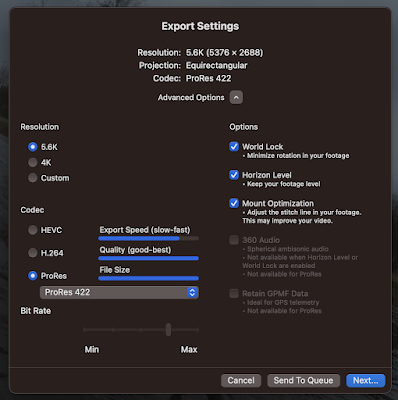
Sharing 360° video?
So, you've got a 360 degree video file from your GoPro. What to do with it? Well, share it on YouTube. YouTube supports uploading and pl...
-
 So, you've got a 360 degree video file from your GoPro. What to do with it? Well, share it on YouTube. YouTube supports uploading and pl...
 -
(CTAN, a meta-level resource for all things TeX www.ctan.org/ ) Step 1: MacTeX packages for Mac. Install MacTeX, after which do the foll...
-
First, read the article "AI-generated art illustrates another problem with technology" by John Naughton on the Guardian (20 Aug...